I Went to Lobster Boat Races in Maine — Here’s What It Was Like

I grew up near the coast, but I’d never watched lobster boats race until last summer. Now I can’t stop talking about it. It’s loud. It’s fast. It’s somehow sweet and tough at the same time. Kinda like Maine itself.

I went to races in Boothbay Harbor and Stonington, and I caught a day in Rockland from the breakwater. Three stops, three different moods, same wild grin on my face.

The Start: Fog, Horns, and Coffee That Tastes Like Salt

Boothbay Harbor woke up foggy. The kind that makes your hair feel sticky. By 9 a.m., the docks were packed. Kids in life vests. Folks in orange Grundens. A line for coffee and whoopie pies. I stood by a family selling raffle tickets to raise money for the fire station. This is how these races feel: homegrown, but fierce.

When the horn blew, the starter waved a green flag from a small boat. Two big white hulls — one a 35-foot Duffy, and another that looked like a Calvin Beal — roared forward. You could feel it in your ribs. My coffee shook.

A guy next to me yelled, “That’s a Cat engine!” I just nodded and smiled. He was right. You could hear the deep diesel thump. It sounds like thunder in a tunnel.
If talk of engines gets your pulse up, dive into XCAT Racing to see what cutting-edge speed looks like when fiberglass, horsepower, and nerves go full tilt.

Stonington: Guts and Glitter (Well, Salt)

Stonington was sunny and windy. I grabbed a crab roll from a church table and found a spot by the pier. The water there is that bright, hard blue. The kind that can trick you into a sunburn in no time.

The Lady Skippers race had me clapping like I knew everyone on board. One woman, hair tucked in a cap, pushed the throttle and sent a white rooster tail up behind her boat. A little boy next to me shouted, “Go, Auntie!” I got misty, which felt silly. And also right.

Not everything went smooth. One boat puffed gray smoke halfway down the run. The captain backed off and waved. Folks on the committee skiff motored over. A tow line went on. He got a big cheer anyway. That’s the thing — it looks wild, but it feels safe. The Coast Guard and harbor patrol kept the course clear, and every captain I met seemed extra careful.

Rockland: Watching From the Water (With Chips)

Rockland was a treat. A friend took me out in his little skiff. We drifted near the breakwater with a bunch of other small boats, all in a long, neat line the harbor guys told us to keep. Sun on the rocks. Gulls complaining. Salt spray on my sunglasses.

From the water, you hear the turbos spool up. It’s like someone zips a giant zipper. The boats jump forward. Wakes slap your hull — not hard, but enough to set your chips dancing. I grabbed the bag and laughed. Priorities.

One boat, still stacked with bait crates and painted floats along the rail, went screaming past. Working gear on, throttle wide open. You don’t forget that.

The Vibe: Family Cookout Meets Thunder Show

It’s not fancy. It’s not slow. But it’s friendly. Folks share sunscreen. People hand kids earplugs. A woman in a Bruins sweatshirt told me which hulls to watch, like she was letting me in on a secret. I learned names I didn’t know — Duffy, Young Brothers, Calvin Beal — like they were old friends.

Between heats, everyone chats. Engines cool. You wander for a doughboy or Gifford’s ice cream. If you’re lucky, someone hands you a cold Moxie and a story about last year’s wind. For a look at what might be roaring up the coast next season, take a peek at National Fisherman’s preview of the 2025 Maine lobster boat races.

What I Loved

  • Real boats, real people. These are working boats, not show toys.
  • The sound. Big diesels. Some gas rigs. All heart.
  • The Lady Skippers race. Pure joy.
  • Easy to watch from shore, and often free.
  • The mix: church bake sales, harbor rules, and full-send racing. Somehow it works.

What Bugged Me (A Little)

  • Parking can be a mess. Small towns, big crowds.
  • It’s loud. I keep foam earplugs in my pocket. You should too.
  • Schedules float with tide and fog. You wait around. Bring a hat and patience.
  • Diesel fumes drift by sometimes. Not my favorite smell, even by the ocean.

Those long pauses on the dock are perfect for catching up on messages — or, if you and your partner are feeling playful, for trading some flirty lines over Google Hangouts. Check out this step-by-step Google Hangouts sexting guide to learn tips, privacy tricks, and creative prompts that turn idle moments into something a lot hotter than diesel fumes. If a day of standing on the pier leaves your shoulders knotted up and you find yourself day-dreaming about a proper rubdown the next time you’re traveling, a quick browse through Rubmaps’ Imperial Beach listings will point you toward massage spots with detailed reviews, pricing info, and user tips so you can pick the perfect place to shake off those dockside aches.

If You Go: Quick Tips From My Notebook

  • Check the Maine Lobster Boat Racing schedule ahead of time. Towns change by weekend, usually June and July.
  • Arrive early. Grab coffee and a spot by the pier.
  • Bring cash for food stands and fundraisers.
  • Sunscreen, hat, and a light jacket. The wind bites, even in July.
  • Ear protection for kids. And honestly, for you.
  • Watching from the water? Keep clear of the course. Listen to the harbor guys. They’re not kidding.

Little Moments I Can’t Shake

In Boothbay, a captain idled by after his run and gave a shy wave, like he wanted to say thanks but didn’t have the words. In Stonington, a little girl counted down the start under her breath, fists tight, eyes huge. In Rockland, the sun lit the spray gold for half a second, and every boat looked like a comet.

You know what? I went for the speed. I stayed for the people. And the whoopie pies. Fine — and the thunder.

My Take

Lobster boat racing in Maine is worth the drive and the wait. (I captured even more of the grit and spray in a longer piece here.) It’s loud and messy and full of heart. If you love boats, you’ll grin. If you don’t, you might start.

Would I go again? I already circled dates on my fridge. I’ll be the one with salty hair, a camera strap, and a Moxie in my hand, counting down with the kids: three… two… one… go.

I Tried Five Kinds of Boat Racing. Here’s My Honest Take.

I’m Kayla. I love water, wind, and a good start horn. I’ve raced a bunch of boat types over the years, sometimes for fun, sometimes for that tiny medal that feels way bigger than it looks. I’ll keep it simple. Real races, real gear, real sweat. Some wins. Some swims. You know what? That’s the good part.

Below are the five styles I’ve actually raced, with what felt great and what didn’t. If you’re boat-curious, this might help.
I also put together a longer write-up that dives into every heat, blister, and capsize—here’s that candid recap if you’d like to bookmark it.


Rowing (Crew): Long Pulls, Loud Cox, Big Grins

I rowed 2-seat in a women’s eight at Head of the Hooch down in Chattanooga. Cold morning. Flat water. We launched late and I tied my shoe in the boat—don’t do that. We passed two crews, got passed by one, and our cox called a “power 10” so hard my legs buzzed.

I’ve also done a 2,000-meter sprint at Green Lake in Seattle. That one hurt in that good, spicy way. The stroke rate was high, the catch had to be clean, and my hands tore just a bit under the tape. I still have that blister line. Weird badge, but I keep it.

What I love:

  • The rhythm. Catch, drive, finish, feather. It’s like a heartbeat.
  • The team lock-in. When the boat sets, it sings. You feel speed as balance.
  • Head races feel like a chess race. Sprints feel like a drag race.

What bugged me:

  • Early mornings. So many early mornings.
  • If the set is off, you fight the wobble. It messes with your head.
  • One bad crab and you’re famous for a week.

My score: 4.5/5. When it clicks, it’s magic.


Dragon Boat: Pure Timing, Pure Party

I raced with a mixed crew at the Portland Dragon Boat Festival. Twenty paddlers, one drummer, one steer. We lined up by the Hawthorne Bridge with teams in bright jerseys and crazy good snacks. Our drummer kept the beat like a metronome on fire, and my lats felt it by the second heat.

It’s short. It’s loud. It’s oddly calm inside the pain, because the timing rules all. When the boat ran clean, it felt like skating on warm glass.

What I love:

  • That drum. It locks your cadence and your brain.
  • Fast heats, quick resets. You get lots of reps.
  • Team spirit is off the charts. You cheer for rivals. And they cheer back.

What bugged me:

  • If timing slips even a hair, the bow buries and the speed drops.
  • Hot days fry you between heats. Shade is gold.
  • The blade angle needs to be exact. Sloppy entry? You feel it.

My score: 4/5. Big fun. Big team vibe. Great for all levels.


Dinghy Sailing (Laser/ILCA): Small Boat, Big Burn

I raced a Laser at the Sail Sand Point Turkey Bowl in Seattle. Cold wind. Short courses. I swam twice, which made the hot cocoa after taste like a trophy. Lasers teach you fast. Hike hard. Sheet in smooth. Vang on when it puffs. Eyes on telltales, not your ego.

Starts were tight, and laylines felt cruel when I guessed wrong. I learned to love a clean tack. I also learned my thighs can scream.

What I love:

  • Simple boat, so it’s all you. Skill shows. So does panic.
  • Capsizes happen, but the righting drill is weirdly fun.
  • Great fleet culture. Folks share tips on the ramp.

What bugged me:

  • Cold hands. Numb fingers make knots a joke.
  • Mistakes cost a lot on short legs.
  • If your hiking strap fails, you’re in the drink.

My score: 4.5/5. Pure sailing. No hiding.


Keelboat Racing (J/24 and Beer Can Nights): Crew Work Wins

I trim on a J/24 for Wednesday night beer can races on Lake Union. Tight legs, bridge shadows, and that one puff that always pops near Gas Works. I’ve also done Round the County up in the San Juans. That one gave me a night watch with a headlamp, a thermos, and a sky full of stars. Different beasts, both good.

On keelboats, roles matter. Bow calls distance, trimmer feels the groove, driver keeps the lane, and the main works the traveler like a DJ. When the groove is right, the boat hums. When it isn’t, we talk it out and get back in phase.

What I love:

  • Jobs are clear. You can master your slice.
  • Tactical calls feel like puzzles. Wind lines, shifts, traffic.
  • After-race docks. Story time and dock tacos.

What bugged me:

  • Gear breaks. Spin sheets knot at the worst time.
  • Protests can get spicy. Rules matter, and so does tone.
  • Long waits at marks if the wind dies. Patience game.

My score: 4/5. Team chess on water.


Paddle Races (SUP and Surfski): You vs. You… and the Chop

I raced Round the Rock on a 14-foot SUP around Mercer Island. Long course. Long day. I brought too little water once, and never again. The start felt calm, then the ferries and wind built this mean little cross-chop. I learned a staggered stance and a soft grip save your legs.

On a surfski, I did the Gorge Downwind Champs in Hood River. That one is pure joy when the bumps line up. Catch a wave, link to the next, and your boat surfs like a fast seal. Miss the line and you pay in gasping breaths. Fair deal.

What I love:

  • Clear progress. Stroke better, go faster. No mystery.
  • Downwind days feel like a video game with real spray.
  • Simple kit. Boat, paddle, PFD, leash. Go.

What bugged me:

  • Remount practice is a must. Swimming happens.
  • Bumpy crosswinds test your core and your mood.
  • Nutrition planning matters. Bonk once, and you learn.

My score: 4.5/5. Honest work, honest speed.


So… Which One Fits You?

  • Love teamwork and a steady rhythm? Rowing or dragon boat. You’ll feel part of a machine, in a good way.
  • Want small-boat skill and a grin after a swim? Try a Laser day.
  • Crave tactics and crew roles? Keelboats scratch that itch.
  • Want a simple setup and a big engine day? Go paddle—SUP or surfski—then sleep like a rock.
  • If all-out horsepower is your flavor, watch the twin-hull rockets at XCAT Racing and see what offshore powerboats can really do. And for a totally different, salty dose of throttle-up tradition, take a peek at what a lobster boat race in Maine feels like; it’s part festival, part full-throttle showdown.

Here’s the thing: I thought I wanted quiet. I ended up loving the noise—of wind in the rigging, of a cox calling rate, of a drummer yelling “Up! Up!” Funny, right? But it makes sense. The water talks back. And when it does, you listen.

If you’re near Seattle, look for:

  • Head of the Lake (rowing) at UW’s Montlake Cut
  • Sail Sand Point frostbite events (dinghy)
  • Lake Union Wednesday nights (keelboats)
  • Round the Rock (SUP)
  • And if you can travel a bit, the Portland Dragon Boat Festival or the Gorge Downwind Champs

Travel tip: if you ever find yourself in northern France, the Deûle canal in Lille hosts casual paddle sprints and low-key regattas all summer long. To line up post-race meet-ups with locals who are equally stoked on life by the water, check out this handy social guide ➜ PlanCul Lille—it rounds up the best waterfront hangouts and after-paddle gatherings so you can swap race stories over a cold drink the moment you hit the quay.

After any of these race days, your muscles can feel like overcooked rigging lines. If you ever find yourself cooling down near Memphis or the suburb of Bartlett, Tennessee, and need professional hands to unknot your back, check out this no-nonsense directory of massage spots in Bartlett—it’s packed with first-hand reviews and locations, so you can pick a place that actually gets athletes’ aches and bounce back before the next horn.

Try one. Or two. You might hate the cold. You might love the rush. I did both. And I keep going back.

Boat Racing in Sheboygan: My Windy, Splashy, Grin-Soaked Weekend

I went up to Sheboygan for a race weekend on Lake Michigan, and I thought I knew wind. I didn’t. The lake has moods. It whispers, then it shouts. And somehow, I loved both.

Why Sheboygan, of all places?

Short answer: the lake. Long answer: the whole scene. The lighthouse. The long breakwall. Blue Harbor’s big blue roof. Gulls yelling. Kids with ice cream. Brats smoking on a grill by the club. It feels homey, but also a little wild. That knack for hosting on-the-water excitement isn’t lost on the pros—Sheboygan recently earned the 2023 American Power Boat Association Best Race Site Award for the inaugural Mercury Racing Midwest Challenge, underscoring how seriously the town takes its marine horsepower. For the full story on that exact Sheboygan adventure, you can read my windy, splashy, grin-soaked weekend recap where I lay out every tack and spill.

You know what? That mix hooks you.

For a taste of how far small-boat adrenaline can go, check out the wave-spraying action at XCAT Racing before you even lace up your deck shoes.

Race day feel (and those sneaky waves)

We sailed a 23-foot keelboat, borrowed from a local friend. Four of us. Simple setup. One main, one jib, and a kite for downwind legs. The wind sat around 12 to 16 knots, then popped to 20 in sharp gusts. The chop stacked up fast off the breakwall. Not huge, but tight and snappy. Like the lake was tapping you on the nose—over and over.

First start, we were late. My fault. I counted the horn, then lost track talking about the line bias. Classic. We crossed, ducked two boats, and slid into clear air. The breeze veered right. We tacked early and got a little lane. It wasn’t pretty, but it worked.

Second race, we nailed the start. Bow out. Flat sails. The boat felt light. Then a wave slapped the bow. Cold spray hit me right in the mouth. I laughed, then choked. That’s Lake Michigan for you—she gives and she takes.

What I used (and what didn’t love me back)

I’m big on gear, but I keep it simple. Here’s what I wore and how it went:

  • Gill spray top: Kept the wind off my chest and shoulders. No leaks at the neck. A bit stiff, though.
  • Zhik PFD: Snug and comfy. No rubbing under the arms. A win.
  • Harken sailing gloves: Good grip, but the right seam rubbed my ring finger raw by Race 3.
  • Merino base layer: Warm even when damp. Dry by lunch. Magic.
  • Sun Bum SPF 50: Didn’t burn, even with the glare. Smells like summer.
  • Cheap wool hat from Fleet Farm: Not cute. Very warm. I kept it.

I also clipped a small CamelBak to the rail with a carabiner. That may sound odd, but it’s easy to grab in a puff. No fumbling in a bag when your hands are busy.

I landed on that setup only after a season of experimentation; earlier this year I tried five kinds of boat racing and the crossover lessons shaped what ended up in my duffel.

Little moments that stuck

  • A kid on the pier rang a cowbell every time a boat passed the mark. He was ruthless. We got a pity ring, I think.
  • A seiche must have rolled in. Water level looked different by the third race. No tide here, but the lake can shift like it’s breathing.
  • On the downwind of Race 2, we got a tiny spinnaker wrap. I froze. Then I took a breath, eased the sheet, and the wrap fell out like it never happened. Felt like a magic trick.
  • We finished one race in third. The skipper kissed his glove and yelled, “That’s for the brat fry.” I’m still not sure what that meant. But I cheered anyway.

Those dockside cheers took me right back to the salty pandemonium of the lobster boat races in Maine, proof that boat-crazy crowds sound the same no matter the coast.

Shore stuff matters too

After racing, we walked the South Pier. I ate a brat with onions and mustard, because you have to. The sun dropped behind the town, and the lake turned silver. A band played near the boardwalk. Folks wore hoodies and boat shoes. Someone handed me a Spotted Cow. Yes, it tasted like a win.

Launch and parking were smooth near the marina. The volunteers were kind, which counts more than people think.

If you’re rolling into town solo and want to extend the post-race camaraderie beyond the docks, skim through this curated list of the best sex apps singles should try in 2025 for side-by-side feature breakdowns and safety notes that can help you meet like-minded people once the sails are furled.

Crews towing trailers toward West Coast regattas might want to unkink road-trip shoulders with a pit-stop massage; the crowdsourced venue reviews at Rubmaps Pittsburg make it easy to find a reputable spot that knows how to work out sailor knots before you tackle the next leg of the drive.

What I loved

  • The wind builds in a steady, honest way. You can read it on the water.
  • The race committee ran clean starts. No chaos, just clear horns and flags.
  • Short, tight courses. Not boring. Not too long.
  • The local vibe. Friendly. Simple. Real.

What bugged me (only a bit)

  • The breakwall can make a weird rebound chop. The waves bounce back. It’s clappy and messy.
  • Gloves rubbed my finger raw. Tape would’ve helped. My bad.
  • The water is cold. Even in summer. If you hate cold, layer up or you’ll pout.

Tips if you go

  • Bring a spray top and a warm hat. Even if the sun looks nice, it’ll turn sharp.
  • Bright tape your gear. Dropped my multitool on the dock and found it thanks to neon tape.
  • Don’t over-trim. In puffy air, ease a hair and keep the boat flat. Flat is fast.
  • Watch the right side near the pier in a building lake breeze. Pressure stacks there sometimes.
  • Eat first. The chop will steal your energy. A brat after is great, but a banana before saves the day.
  • If you’re sticking around, the Sonar Wednesday Night Racing series run by SEAS lets visiting crews hop aboard equal boats and spar against the Sheboygan Yacht Club fleet every week.

My quick take

Boat racing in Sheboygan feels honest. The lake tests you, but it’s fair. It’s loud, a little cold, and very fun. I came home tired, salty, and grinning like a fool.

Would I go back? Oh yeah. I’m already packing the wool hat. And yes, I’ll tape that finger.

– Kayla

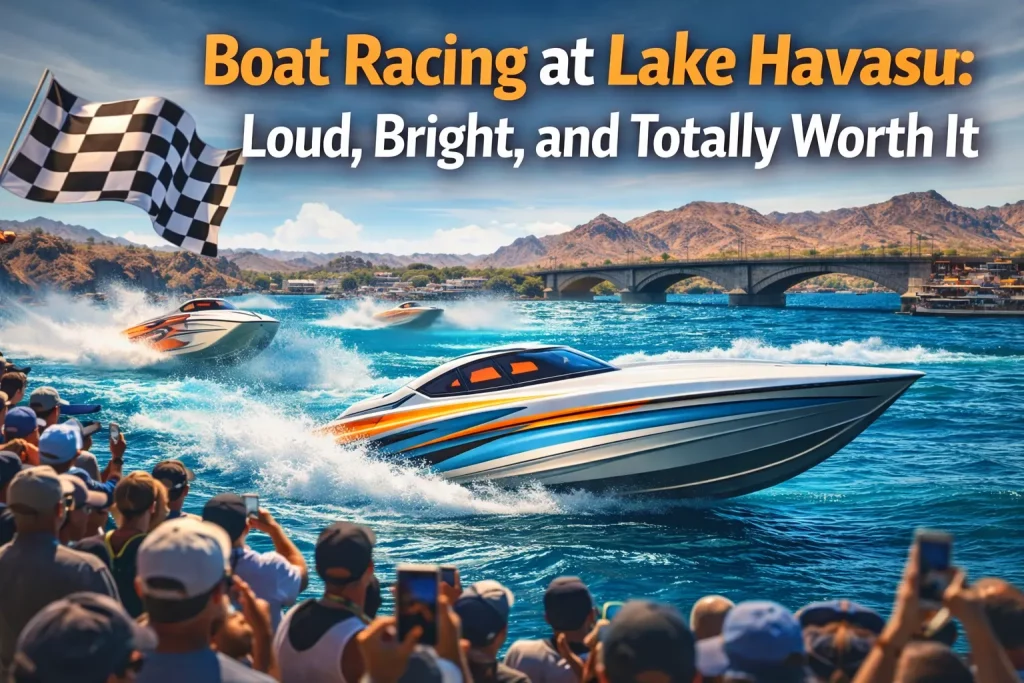
Boat Racing at Lake Havasu: Loud, Bright, and Totally Worth It

I went to Lake Havasu twice this year for boat races. Once in April for Desert Storm. If you’d like another angle on the same roar-and-glitter weekend, check out this Lake Havasu race recap that broke down every pass and prop wash. Then back in October for the IJSBA World Finals for jet skis. Different vibes. Same big grin. My heart still thumps when I think about those starts. Not sure which discipline will grab you the hardest? This straight-shooting comparison of five racing styles weighs the pros, cons, and splashes of each.

You know what? I don’t even love crowds. But this crowd felt fun, not messy. It’s sun, noise, and shiny boats. It’s kids with snow cones and dads pointing at engines. It’s the London Bridge right there, like a postcard, but with thunder on the water.

The scene, up close

I watched the Desert Storm Shootout from Rotary Park with my cheap camp chair and a soft cooler. The air smelled like sunscreen and fuel. Big cats and vee-hulls ripped across Thompson Bay. Some ran well over 150 mph. I felt the rumble in my chest, like bass at a concert. I wore 3M foam earplugs because, honestly, it’s loud. Good loud. But still loud.
Curious about dates, maps, or how to register? The official Desert Storm event page keeps an updated rundown of everything from the street party to the Shootout.
If you want to see how these high-octane catamarans perform on the international stage, spend a minute browsing the race clips on XCAT Racing.

The day before, I walked the Desert Storm street party on McCulloch. Boats lined the street like candy. I put my hand on a slick 48-foot cat with twin Mercury Racing motors. The gelcoat felt warm from the sun. A little boy next to me said, “That one looks like a shark.” He wasn’t wrong.

October felt different. I sat on the sandy berm at Crazy Horse Campgrounds for the IJSBA World Finals. Jet skis blasted off the line, hit the first turn, and threw a wall of spray. The announcer called out passes, and the crowd yelled like we all knew the riders. We didn’t. But it felt like we did. Vendor row had Yamaha, Sea-Doo, and parts folks like Hydro-Turf and Jettrim. I grabbed a lemon ice and got sand in my shoes. Worth it.
Planning ahead? The IJSBA’s 2025 World Finals overview already lists tentative schedules, classes, and travel tips so you can lock in your Havasu plans early.

Where I watched (and why it worked)

  • Rotary Park beach: Wide view of Thompson Bay for the shootout. I arrived by 8 a.m. to snag space.
  • London Bridge Beach: Easy for families. Restrooms. Shade if you hug the trees.
  • The channel wall near the bridge: Boats parade by all day. Sheriff boats keep it calm there.
  • Crazy Horse berm: Best for the World Finals. Bring a hat. The sun doesn’t play around.

I also checked out Windsor Beach at the state park. Parking is smoother there, but there’s a fee. Site Six launch ramp is free, but it’s jammed. Folks get testy when they’re backing trailers. I just waved, smiled, and kept my toes clear.

The best parts

  • The sound: Deep, sharp, and a little scary in a fun way.
  • The people: Boat folks share tips, snacks, and shade like neighbors.
  • The water color: That bright blue-green. It feels fake, but it’s not.
  • The pacing: Fast bursts, then calm, then fast again. You can breathe, then cheer.
  • Sunset: Pink sky over the bridge with boats heading in. Picture time.

I grabbed lunch at Barley Brothers near the bridge. Good burger. Cold iced tea. And yes, I watched a huge catamaran idle by while I ate. Felt like a movie.

The not-so-great parts

I’m going to tell the truth. It’s hot. April was warm, and October was sneaky hot. My phone even gave me a heat warning one day. While I waited for the alert to clear, I killed a few minutes laughing at some cheeky texting humor over at these sexting memes that deliver the kind of quick, scrollable laughs you can throw into the group chat when the race schedule stalls. Also, afternoon wind hits the lake and chops it up. The gusts aren’t quite Sheboygan-level, but reading about a windy, grin-soaked weekend of racing on Lake Michigan reminded me that chop can crank the adrenaline as much as horsepower. The water gets bouncy, so small boats slap hard. Parking near the bridge fills up fast. And gas at the marina made my card sigh.

One more thing. The noise is fun, but it lingers. My ears rang after Desert Storm day one. Day two, I wore earplugs the whole time and felt fine. Lesson learned.

What I brought that actually helped

  • Foam earplugs (3M). Cheap, easy, saved my ears.
  • SPF 50 sunscreen and a big hat. I reapplied every two hours. No hero moves.
  • A small dry bag for my phone and keys.
  • A light camp chair and a thin towel for the sand.
  • A Yeti-style bottle filled with ice water. I refilled whenever I could.

I know it sounds like a lot. But I used every single thing.

After all that gear schlepping, my shoulders were toast by the drive home. If you ever tack a Midwestern road trip onto your racing season, the crowd-sourced intel over at Rubmaps Carbondale can point you toward massage spots with honest reviews, hours, and pricing so you roll into your next stop loosened up instead of locked up.

Timing and small tricks I wish I knew sooner

  • Go early. Mornings are calmer. Better parking. Better mood.
  • Spring winds show up after lunch. Plan shots and swims before noon.
  • Desert Storm is in late April. The IJSBA World Finals land in October.
  • Bring cash. Some food stands did cards, some didn’t.
  • Park at the state park or London Bridge Beach and walk along the water. It’s pretty.
  • Be nice to the ramp crews and the sheriff boats. They keep it safe for everyone.

One real moment I can’t shake

A bright orange cat shot past the buoy line during the shootout, and the bay fell silent for a second. Then the speed hit me like a push on the chest. I looked over, and a grandma in a sun visor whispered, “Mercy.” We smiled at each other like old friends. Weird how fast joy spreads.

During the World Finals, a rider fell in the first turn. He popped up, waved, climbed back on, and still finished. The crowd cheered louder than for the winner. I got chills. I don’t know why that got me, but it did.

Food, shade, and tiny comforts

Between heats, I shared fries with my nephew at the patio by the bridge. We watched paddleboarders slip through the channel while race boats idled out. It’s a small thing, but that little break kept us happy. Shade plus salt plus water equals fewer meltdowns. That’s math I can use.

Final take

Would I go again? Yep. With earplugs, a hat, and plenty of water. Boat racing at Lake Havasu is bright and loud and a little wild. It feels big, but it still feels local. I went for the speed, sure. But I stayed for the people, the color of the lake, and that sweet hush right before the start. That moment hooks you. It hooked me.

I Tried A Bunch of Dragon Boat Racing Gear — Here’s What Actually Helped

I’ve paddled in heat, rain, and that weird cold wind that hits you right before a start. I’ve raced in Long Beach, on the Charles in Boston, and at Treasure Island in San Francisco where the gusts feel rude. I even hauled my paddle out to a scorching weekend of boat racing at Lake Havasu just to see how the desert vibes compared. I’ve broken stuff. I’ve fixed stuff. And yes, I’ve learned what gear actually makes a difference on race day.

Let me explain what worked for me, what didn’t, and what I’d buy again tomorrow.

If you want to lose a few hours geeking out over paddling gadgets, the gear library at XCAT Racing is a dangerously fun place to start browsing. That rabbit hole actually began with my detailed breakdown, I Tried A Bunch of Dragon Boat Racing Gear — Here’s What Actually Helped, where I put every paddle, pad, and piece of foam through the ringer.

The Paddle: My Right Hand

I started with a Grey Owl wood dragon paddle. It felt warm and honest. But it was heavy by the third piece. My shoulder complained first.

Then I switched to a Hornet Watersports carbon paddle (IDBF legal). Mine is 47 inches. I’m 5'7". It felt light, quick, and easy to move. My catch got cleaner. My rate stayed steady when we sprinted through 200 meters. Small note though: the blade edge chipped a little after a rocky dock at practice. I sealed it with a thin bead of marine epoxy and a bit of electrical tape. That fix held all season.

I also borrowed a Burnwater Reactor III (47 inch) for a full race day in Long Beach. It felt springy. My pull felt strong, and I didn’t gas out as fast. The shaft had just a bit of flex that helped my elbows. Pricey? Yup. But I’d choose it for finals.

If you’re shopping for a solid, IDBF-approved starter blade or just want a reliable backup, take a look at the ZSS Dragon Boat paddles — they’re sturdy, reasonably priced, and easy to size.

Quick sizing tip from my own mess-ups: when I used 48 inches, my lower back got tight. At 47, my reach was still solid, and my body felt better. Most paddlers on my team run 46–49, based on height and seat.

Little grips that matter:

  • Hockey tape on the top hand for stop-and-go starts.
  • A tiny line of wax on the shaft so wet hands don’t slide.

PFDs: Safe, But Can You Breathe?

I’ve raced with the NRS Ninja and the Astral YTV. Both are low-profile and IDBF-friendly where PFDs are required. The Ninja feels more snug and sits a bit higher, which helps for rotation. The YTV is super light and soft. I wore the YTV at a windy regatta on the Bay and forgot it was on. That’s rare. If you ever need a refresher on what the officials actually look for in buoyancy aids and other essentials, the BDA safety procedures for regattas and training lay everything out in clear, practical detail.

One issue though: I got chafing under my arms with both when I wore a tank. A thin rash guard fixed it. So did a dab of BodyGlide on the seams.

Pockets? I keep it simple. Whistle, a gel, and a small key. No bricks in there.

Hands: Gloves, Tape, and the Blister That Taught Me

Rainy practice in Portland, I tore a blister on my index finger right at the start. It hurt every pull. Since then, I use Leukotape on that spot for long sets. For wet days, I wear NRS Boater’s Gloves (half-finger). They grip well on carbon and don’t soak up too much water. On hot days, I go with bare hands and a little strip of hockey tape where the shaft rubs.

One more thing: trim your nails. I learned the hard way during a start when I nicked my top hand. It wasn’t cute.

The Seat Pad: Sit Happy, Paddle Better

A seat pad sounds silly until your butt goes numb at 500 meters. I’ve tried three:

  • Hornet gel pad: comfy, but it slid on a glossy seat when I wore slick shorts.
  • Cheap garden kneeling pad (cut to shape, duct-taped edges): ugly but solid. No slip. Good for practice boats.
  • Thin yoga mat square with contact cement: light and cheap, but it soaks water.

My fix: Hornet gel pad plus two lines of grippy tape on the bottom. It stays put now.

Shoes and Clothes: Don’t Overthink It, But Don’t Freeze

Shoes matter because boat floors get slimy. I use the Astral Loyak. Thin sole, lots of feel, great grip. On budget days I wore old Converse with drain holes poked in. That worked too.

Clothes that keep me sane:

  • Warm: NRS Hydroskin pants (1.5 mm) and a long-sleeve rash guard under a light spray top.
  • Hot: quick-dry shorts and a short-sleeve tech shirt. No cotton. It stays wet and cold.
  • Wind: a light shell like the NRS Endurance jacket. Keeps the splash off.

Also, bring a dry change. Your future self will thank you.

Steering Gear: When I’m On The Sweep

I steer sometimes. I’ve used a Burnwater Fusion steering oar and a Grey Owl wood sweep. The Burnwater is lighter and doesn’t wear out my shoulder as fast in crosswind. In Long Beach, that helped me hold a clean line when two boats hugged our lane. The Grey Owl feels classic and steady, but it’s heavier, so I tire faster on turns. Always clip a safety lanyard to the sweep. I’ve seen a blade pop out on a hard draw. Scary stuff.

Drummer Bits: Beat, Don’t Bruise

When I drum, I bring a small foam square for the seat and a rubber mallet. Wood mallets bounce and sting my wrist. Rubber feels kinder and still gives a sharp beat. Earplugs help when the horn echoes off the water. And shoes with grip, because standing on a wet bow can get spicy.

Little Extras That Make Life Easier

  • Water: a soft flask tucked in my PFD, or a small bottle under my bench. I sip at marshaling. Big bladders slosh and get in the way.
  • Dry bag: Sea to Summit 8L for warm layers and snacks.
  • Tape: Leukotape for fingers, electrical tape for paddle edges, and a bit of duct tape for… everything else.
  • Bailer: a cut plastic detergent bottle. Old-school, works fast.
  • Towel: a small microfiber one. Takes no space and saves me from cold bus rides home.

Long regatta weekends also taught me that a proper massage can rescue aching shoulders faster than any foam roller. If you happen to be competing around northern Georgia and want trusted intel on reputable spots, the crowd-sourced Rubmaps Acworth listings break down each massage studio’s vibe, cleanliness, and therapist specialties, so you can book a post-race rub-down without playing roulette with your recovery time.

What I Pack For Practice

  • Paddle + seat pad
  • PFD
  • Gloves or tape
  • Water
  • Light jacket
  • Towel and dry shirt
  • Flip-flops for after
  • Snack (banana or a granola bar)

Simple, right?

What Broke On Me (And How I Fixed It)

  • Paddle edge: chipped on a dock. Marine epoxy + tape fixed it.
  • Glove seams: ripped at the thumb after a month. I switched brands and kept a spare pair.
  • Cheap seat pad: soaked through and smelled bad. I let it fully dry in the sun and moved on.

Race Day Feelings I Didn’t Expect

My hands shook at my first big start. Not from fear. From not eating enough. Now I bring a banana and a little electrolyte mix. Also, I carry a second hair tie. Losing one mid-warmup is chaos.

You know what? The small stuff adds up. When I’m dry, warm, and not sliding all over the bench, my stroke stays calm. And calm wins meters.

Talking about post-race calm, our crew loves unwinding by swapping goofy victory dances and behind-the-scenes clips on Snapchat once the boats are racked. If your snaps run on the flirtier side and you’d like a crash course in keeping them fun yet discreet, check out the guide to Snap Coquin — it walks you through playful ideas, privacy tips, and etiquette so your spicy highlights don’t turn into rookie mistakes.

For a sideways dive into how each discipline changes the way you pick gear, check out my field notes from [trying five kinds of boat racing](https://www.xcatracing.com/i-tried-five

Boat Racing San Diego: My Heart on the Water

I didn’t plan to race boats. I thought it was for pros, or folks with fancy gear. Then a friend texted me on a Wednesday: “Want to crew? We’re short.” I said yes before I could overthink it.
His message had the little ⛵️ next to a beer mug—emoji shorthand that got the point across instantly. If you want to get fluent in what tiny icons can really say, take a peek at this illustrated rundown of sexting emojis where you’ll uncover the hidden meanings behind popular symbols and pick up ideas for making your own texts sharper, funnier, and way more expressive.
That one night changed how I see San Diego—honestly, how I see speed.

First splash: the Wednesday Beer Can Races

We met at San Diego Yacht Club. The sun was soft. The wind felt like a cool hand on my face. I got tossed on a J/105 with a small crew. Fast boat. Big main. Simple lines. My job? Rail meat. Sit on the high side. Lean. Move when told. Don’t fall in. Easy, right? These evening dashes are actually part of the San Diego Yacht Club’s J/22 Beer Can Series, an after-work tradition that welcomes newcomers and salty veterans alike.

Not really. But also yes.

We tacked toward Harbor Island. I heard “Ready about?” and then the boat snapped through the wind. My leg slipped on the first tack. Non-marking shoes matter. I wore Sperrys after that day, and never looked back. I also wore sailing gloves (Gill) because the jib sheets bite. And they do bite.

At the leeward mark, I helped with the spinnaker. It was a red chute—bright as hot sauce. The crew called “Hoist!” and that sail filled like a chest taking a deep breath. We took off. I could feel the bow start to hum. My cheeks hurt because I was grinning so hard.

We finished mid-fleet. I didn’t care. We shared a bag of chips on the dock and laughed about my messy line tail. You know what? It was worth every bruise.

Where to watch for free (and still feel the rush)

You can watch these Wednesday night races without a ticket. Bring a jacket, a hat, and time.

  • Shelter Island Shoreline Park: You get close passes. Boats skim by like birds.
  • Harbor Island Park: Wider view. Great for photos with the skyline.
  • Cabrillo National Monument: Farther out, but the whole bay looks like tiny toy boats. Pretty at sunset.

Show up by 5:00 pm since parking fills fast. I sometimes park near Point Loma Seafoods and walk. Then I grab a shrimp cocktail after. Little tradition now.

Bayfair on Mission Bay: Loud boats, big grins

Let me explain something about hydroplanes. They don’t whisper. They scream. San Diego Bayfair rolls in each September on Mission Bay, and those H1 Unlimited boats fly. They sit on a cushion of air. It looks unreal, like they’re skimming over ice.

For an eye-opening taste of how powerboat competition plays out on a global stage, visit the XCAT Racing World Championship site and watch those twin-hull rockets shred water at over 100 mph.

I watched from East Vacation Island. The smell of kettle corn, sunscreen, and engine fuel mixed in the air. I wore foam earplugs (3M) and I was glad I did. Those engines pound your chest. I brought a small chair, a light hoodie, and cash for tacos. Easy day.

What I loved: the crowd. Kids waving flags. Old fans talking lap speeds. The pits feel like a garage meet-up, but bigger. You can see crews wrenching on the boats—sharp tools, quick hands, focused eyes. It’s very “race day” but still friendly.

What I didn’t love: long lines for food at noon, and dust on windy days. And the sun bounces off the water. SPF 50 (I use Sun Bum) is not optional.

The sweet beginner side: Mission Bay sailing

Hydroplanes are pure noise and speed. Fun, yes. But my heart went back to sails. I tried a Friday night race out of Mission Bay Yacht Club on a small keelboat. Short course. Mark roundings close to shore. It felt like a game of chess but wet.

We had a Catalina 30 behind us, chugging along like a steady uncle. A pair of Hobie Cats zipped past like kids on scooters. I learned to call puffs. “Dark water, starboard side!” I trimmed the jib and felt the sheet load. My hands buzzed.

If you’ve never sailed, the Mission Bay Aquatic Center runs classes (check out their sailing lessons page for schedules and prices). You learn knots, the wind clock, right of way. Simple stuff that saves you when things get weird. And they do get weird—kelp can wrap the rudder when you least want it.

Little gear that saved my bacon

You don’t need a closet full of fancy stuff. But a few things made my days much better.

  • Non-marking deck shoes (Sperry or Helly Hansen): No more slips.
  • Sailing gloves (Gill short finger): Your hands will thank you.
  • Polarized sunglasses with a retainer (Costa + Croakies): The glare is real.
  • Lightweight PFD (Mustang Survival inflatable): I forget it’s on.
  • Buff or neck gaiter: Keeps sun off and you look kind of legit.
  • Reusable bottle with a clip (I use a Nalgene): Clip it to something. Boats bounce.

Tiny add-on: a dry bag for your phone. Don’t ask how I know.

Long days on the rail will make your back knot up like a halyard snarl. When I was up in Kingston for a freshwater regatta, I discovered sailors trade not only weather apps but also massage intel—if your shoulders ever need untangling, check Rubmaps Kingston for a crowd-sourced map of local parlors, candid reviews, and pricing so you can loosen those knots before the next starting gun.

The little things I notice every time

San Diego weather lies in the morning. It looks gray. Then noon hits and the west wind fills in. On the bay, 10–15 knots is common in summer. That’s perfect for a fun heel and a tidy wake. In spring, plan for layers. Your teeth will chatter after sunset, no matter how tough you think you are.

I always throw in snacks. Gulls will eyeball you. I swear they know when you open a bag. Also, if you get seasick, watch the horizon and nibble ginger chews. It helps. Don’t hide it. Crew gets it.

Quick routes and bites

  • Pre-race coffee: Jennings House Cafe in Point Loma. Cozy, no fuss.
  • Post-race fish tacos: Mitch’s Seafood. Fresh and fast. Try the grilled mahi.
  • Gear stop: West Marine on Rosecrans. Last-minute gloves or a whistle.

Side note: scooters near Shelter Island are fun after races, but be safe. Wet docks make for bad comedy.

What I didn’t love (and what I learned)

  • Parking near Harbor Island after 5:30 pm? Good luck. Arrive early or use a rideshare.
  • Diesel fumes around marinas can be thick. A mask helps if you’re sensitive.
  • Boat heads (toilets) are… tiny. Go before you go.
  • Crowds at Bayfair get packed by mid-day. Morning arrival saves your sanity.

I also learned to speak up. If you don’t know a knot, ask. If you’re cold, say so. Boats run better when everyone tells the truth.

A small, honest note on safety

I wear a PFD every time. No drama. I also tell the skipper if I can’t swim well that day. Sounds silly, but we all have off days. Hydrate. Eat. Sunscreen. Simple things keep your brain sharp when the wind kicks.

The magic that keeps me coming back

There’s a moment on San Diego Bay when the sun drops behind Point Loma. The sails turn gold. The water turns soft and dark like denim. A sea lion pops up, stares, and sinks again. The bow cuts a quiet path. And for a few seconds, time slows. That’s the good stuff.

Then the horn blasts, and it’s game on. Trim. Hike. Breathe. Smile. Repeat.

Should you try it?

Yes. Even if you’re nervous. Even if you think you don’t know enough. Start with a watch night on Shelter Island. Bring a sweatshirt. See how the fleet moves. Then ask a local club about a crew list. Many boats want new hands. Promise.

And if loud engines are your thing, hit Bayfair. Wear earplugs. Cheer like you mean it.

San Diego boat racing isn’t one thing. It’s sails and spray, tacos and tools, laughter

I Went to Key West Boat Racing — My Honest, First-Hand Take

I finally went to the Key West boat races last November. If you want the extended play-by-play, my honest first-hand diary covers every splash and throttle blip. I can still hear it. The boats felt like thunder rolling across water. My chest shook. My hat almost flew off. Wild, right? It was loud, fast, and kind of beautiful.

For anyone mapping out their own trip, the official 2025 schedule lays out every heat, parade, and pit window—you’ll want it when you’re stitching together flights and hotel dates.

And also a bit chaotic. Let me explain.

First things first: what it felt like

Day one, I watched from Truman Waterfront Park. I grabbed a cafecito from Cuban Coffee Queen and found a spot near the seawall. The water looked calm at first. Then the pace boat rolled by, and the big boys—Class 1 and Super Cat—lined up. When they hit the start, the spray shot up like white curtains. You know what? I forgot to breathe for a second.

In the Super Stock heat, a red cat spun at Turn 2 and kicked up a tall rooster tail. Safety boats were there in seconds—yellow shirts, tight moves, no panic. Later, a Mod Vee boat named Jacks hammered through chop like it was chewing gravel. I loved that class. It’s gritty and human.

Sunday, I splurged and watched from a Fury spectator catamaran out near Turn 1. That was worth it. On water, you’re closer to the lines, and you can feel the speed rise and fall. M CON’s Super Cat looked planted—smooth in the corners, no drama. Another team, WHM, had this deep, mean sound that made people turn their heads without even trying. I caught part of Class 1 too, with those huge canopies and big power. It’s like planes that forgot to fly. That same chest-thumping sensation hit me a few months back when I went to an XCAT powerboat race—the buzz is identical, just on a different shoreline.

Want to dive deeper into the world of twin-hull rockets? Check out XCAT Racing for global race coverage, specs, and jaw-dropping videos.

The Duval Street boat parade

Before the races, there’s the boat parade down Duval. I stood near Sloppy Joe’s with a limeade and watched crews ride the trailers like rock stars. Folks cheered, kids waved, and a mechanic handed me a free decal after I asked about a cracked hatch latch. Tiny thing, but it made me grin. I love that you can ask “What do those tabs do?” and someone actually answers. If you’re filing your own itinerary, the Key West Historic Seaport keeps an up-to-date event listing for the powerboat races that includes parade times and pit-tour details.
The spectator mix runs the gamut from college kids to tattooed retirees, and there’s a surprising number of confident single moms soaking up the sun between heats—if the idea of meeting fun, adventurous women in that same age bracket sounds appealing, swing by this MILF-focused dating hub where you can connect with like-minded locals and set up post-race drinks without the guesswork.

Gear I actually used (and needed)

  • Loop earplugs for the heats. I swapped to over-ear muffs for Class 1. Was it loud? Oh yes.
  • Supergoop PLAY SPF 50 lotion. Reef-safe and no sting in the eyes.
  • Costa polarized sunglasses. The glare on the inside turn is no joke.
  • YETI Rambler bottle. Refill stations helped, but I still ran out once.
  • A cheap folding chair for Truman Waterfront. Security checked my soft cooler (no glass) and waved me in.
  • GoPro Hero 11 with a PolarPro ND filter. The spray made the footage look like a movie, not mush.
  • Scooter rental for getting around. Parking was rough, and the street closures made driving a headache.

Three days of hoisting that GoPro rig and craning my neck at 100-mph rooster tails left my back feeling like rebar. If your post-race road trip sends you up through Georgia and you need a deep-tissue reset, bookmark Rubmaps Hinesville—the directory sorts local massage spots by real user reviews, hours, and service quality, so you can land a skilled therapist and dodge the duds.

Food, because you’ll get hungry

I ate conch fritters from a pop-up by the amphitheater—hot, peppery, gone in two minutes. Later I had a Cuban mix from a little stand by the park gate. And, yes, I got Key lime pie on a stick from Kermit’s after the parade. Sticky fingers, big smile. Totally worth it.

Stuff nobody tells you

  • The sun sneaks up on you. Cloudy start, toasted nose by noon.
  • Wind shifts change everything. On Friday, the chop stirred up, and lap times swung a lot. I first learned that lesson watching boats dice the rollers during the San Diego races; Key West was no different.
  • Cell service crawled during the main heats. I couldn’t upload a single clip till night.
  • Restrooms had lines between races. Go early. Bring patience.
  • If you’re on land, boats can vanish behind spray at the apex. It’s cool, but you might miss passes if you aren’t near a turn.

My favorite spots and moments

  • Truman Waterfront Park near Turn 2: great view of the figure-eight cross. I saw a Super Stock pair trade lanes like they were on rails.
  • Fort Zachary Taylor rocks: more breeze, fewer crowds, but bring grippy shoes.
  • On-water with Fury: closest to the speed. When Class 1 blasted past, it felt like the ocean hiccupped.

One small scare: during a Mod Vee start, two boats came in tight and bumped wakes. No damage, but my heart dropped. Safety teams stayed sharp all weekend. That gave me peace of mind.

What I liked

  • Real speed, real skill. You can see throttle work and trim changes by the boat’s nose.
  • Friendly crews and fans. People share shade, snacks, and stories.
  • Easy access to the parade and pits. Ask a question; you’ll learn something fast.

What bugged me

  • Prices stack up—tickets, food, and rides add up quick. Lakefront stops like the Lake Havasu Classic hit your wallet the same way, so plan for sticker shock wherever you chase the noise.
  • Heat and glare drain you by mid-day.
  • Parking is a pain. Scooters or bicycles win.

Tips I wish I had on day one

  • Bring ear protection for everyone. Even tough guys flinch at Class 1.
  • Polarized shades and a hat with a strap. The wind will try to steal it.
  • Freeze a water bottle the night before. It’s ice by noon.
  • Get there early for a turn view. Passes happen there.
  • Book lodging months ahead. I stayed near Eaton Street, and even that was pricey.
  • If you want photos, shoot burst mode as boats exit the turn. The spray frames the hull just right.

Final verdict

Would I go again? Yep. I’m already planning it. I’d do one day on land for the parade vibe and close-up talk. Then one day on a spectator boat for the sweet angles and the speed you can feel in your ribs.

It’s loud, hot, and a bit messy. But it’s also pure joy—engines, salt air, happy strangers, and a town that knows how to cheer. I’ll call it 4.5 out of 5. Bring sunscreen, bring patience, and bring your sense of wonder. The rest takes care of itself.

Boat Racing in Windsor: My Day by the Thames

I went to Windsor for boat racing because I wanted a day outside that felt a little special. You know what? It did. The castle stood in the background like a postcard, and the river had this steady, calm shine that made me slow down. Then the boats flew by, and calm went out the window in the best way.

Those looking for even more detail on how a Thames-side regatta day unfolds can check out this full write-up of boat racing in Windsor.

So, what did I actually do?

I spent a Saturday at the Windsor & Eton Regatta. It’s a local rowing race on the Thames, and it’s easy to watch from the bank. I set up near Alexandra Gardens with a small picnic blanket, a coffee, and a rain jacket (because, England). I could hear the coxes yelling “Power 10!” like tiny coaches with megaphones. It felt close and loud and fun.

If you ever wonder what boat racing looks like when the engines come out and the speeds skyrocket, check out the spectacle over at XCAT Racing for a glimpse of catamarans slicing water at full throttle. For a broader perspective, XCAT’s team also put multiple disciplines through their paces, and you can read their honest impressions of five different kinds of boat racing right here.

A few crews stood out. I watched The Windsor Boys’ School boat punch off the line like they had springs. Eton crews were smooth, of course. Marlow and Maidenhead sent fast boats too. I liked the single sculls the most, odd as that sounds. One guy crabbed (that oar jam hurts the soul), fixed it, and still won by a canvas. My hands hurt just watching. I smiled anyway.

Where I sat, what I saw

  • Best free views: along the path by the river on the Windsor side.
  • The Brocas meadow on the Eton side gave me the wide shot—castle, river, boats. It’s a mood.
  • Umpires biked the towpath in blazers, following each race. A safety launch shadowed the crews. It felt well run.

Little note: the towpath gets narrow. Strollers fit, but it’s a squeeze when races come through and folks step back in a hurry. I learned to keep my toes in.

Food, smells, and small joys

I grabbed a bacon bap and later a paper cup of Pimm’s with a floating strawberry. Classic. I also tried a Windsor & Eton Brewery ale—light, malty, very picnic-friendly. There were kids waving club flags and dogs doing that wet-shake thing by the bank. A brass band noodled out a tune near the gardens, and yes, it made me grin. One wasp liked my jam donut. We reached an agreement: I let it win.

Programs were on sale (mine was £4). It helped to track who raced who and when. Not required, just neat.

A tiny plot twist: I got on the water later

The regatta got under my skin, so the week after, I booked a Learn to Row session with Eton Excelsior Rowing Club. It was early evening, a little windy, and my grip was awful. We launched from the Thames, upstream of Windsor, and I learned the basic stroke. Arms-body-slide. Slow hands. Tap down. All that.

I caught one sloppy crab and almost kissed the rigger, but I stayed in. My coach was calm and kind. By the third lap, the boat started to run, and the puddles lined up behind us. That tiny hum on the hull? That sound is gold. I slept like a log that night. If you want a taste of that same first-stroke thrill, Eton Excelsior’s detailed Learn to Row information lives right here.

The racing itself: fast, short, and loud

These are sprints. Boats go side by side. The marshal lines them up. There’s a blast, and then it’s blades splashing and legs burning. Some races were over in two minutes. If you blink, you miss the move. I loved the last 200 meters. That’s where you can feel the river lift one crew and flatten another. It’s a game of nerve.

Family-friendly? Yes, with a few notes

  • Free to watch from the bank.
  • Bring cash for food, though most stalls took cards.
  • Seating is limited; a folding chair helps a lot.
  • Toilets near Alexandra Gardens. Short lines, but not nothing.
  • Dogs on leads. Water bowls out, which was sweet.

Parking isn’t awful if you show up before late morning. I used the Alma Road car park, then walked 10 minutes through town. If you arrive at noon, be ready to circle.

I also coaxed my partner to join me for the afternoon with a cheeky text—nothing too saucy, just playful enough to promise riverside fun. While hunting for inspiration, I skimmed through this clever collection of sexting examples that dishes out creative lines you can tweak for anything from a flirty boat-race invite to spicing up everyday messages, so give it a peek if your own texts need a little oar-powered sparkle.

What I didn’t love

  • Weather roulette. Sun to drizzle to sun again. Layers saved me.
  • Crowds stack up by bridges. It gets sticky.
  • Sound gets messy in the wind. You can miss a call and miss the drama.
  • A few banks are uneven; I saw one older man slip a little by the water. Take care.

Rowing—or even a day of leaning over the rail to cheer—can leave your shoulders and lower back begging for mercy. If your post-regatta travels happen to route you through Tennessee for another race or a layover, a quick look at Rubmaps Clarksville gives a clear, user-driven rundown of local massage studios, customer ratings, and service details so you can line up a recovery session fast and get back on the water feeling loose.

Gear I actually used

  • Small blanket and a cheap folding chair
  • Refillable bottle and SPF stick
  • A thin rain shell (used twice, thanked thrice)
  • Power bank for my phone, since I took too many photos
  • Trainers I didn’t mind getting damp

If you’re gearing up for something a little different—say, paddling in sync with a dozen teammates—this breakdown of dragon boat racing gear is a solid starting point: here’s what actually helped.

Extra bits you might care about

  • If you like more formal vibes, Henley is up the river a train ride away. But Windsor feels warmer and closer to the action. Less hats, more laughs.
  • If you’re keen to try rowing, local clubs around Windsor and Eton run beginner courses. Mine with Eton Excelsior felt welcoming, even when I rowed like a baby giraffe. Check out their club homepage for squads, events, and contact details.
  • Summer hay fever? Bring tissues. That river breeze stirs every pollen known to humankind.

My verdict

Would I go again? Yep. The day felt easy and full. The river, the castle, the cheers, the slap of blades—this mix just works. It’s friendly. It’s close. It’s the kind of sport you feel in your chest even if you’ve never sat in a boat. I came for the racing, stayed for the scene, and left wanting one more heat.

If you’re near Windsor when the regatta runs, pack a snack, pick a spot, and let the river tell the story. It’s short, it’s sweet, and when a crew hits the line dead even, the whole bank holds its breath. I did too. Then I clapped till my hands stung, and it felt right.